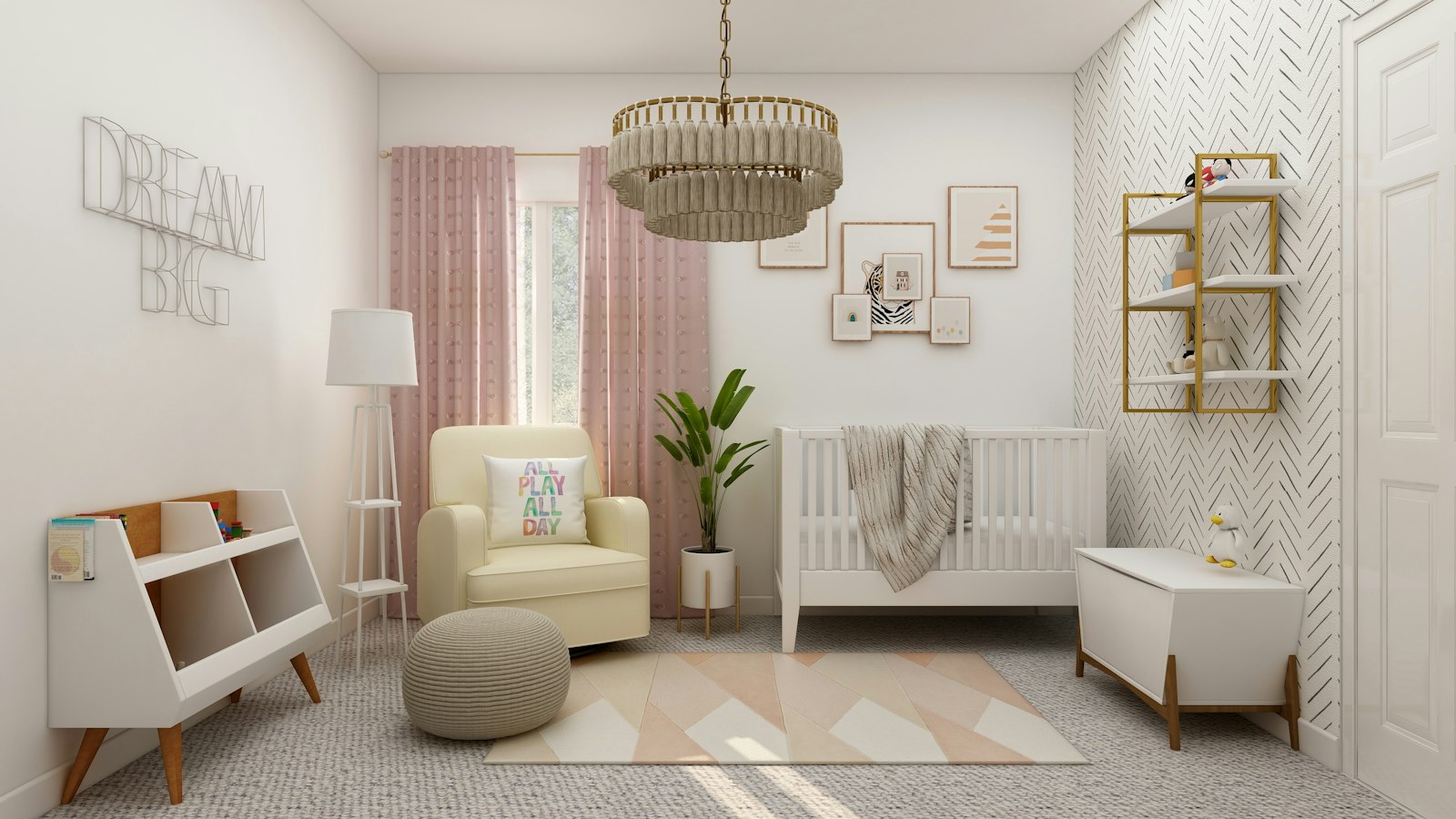
Few pieces of nursery furniture get as much nightly use — or as little upfront scrutiny — as the glider. Here's how the motion actually works, when it's worth the investment, and what separates a chair that lasts years from one that squeaks by month three.
What a Nursery Glider Actually Does
A nursery glider is a chair engineered for one repetitive, high-stakes task: soothing a baby through motion without you having to stand up. Unlike a rocker, which pivots on curved runners and can lurch forward, a glider moves on a fixed arc track or parallel linkage system, so the seat stays level while it swings smoothly back and forth. That level seat matters more than it sounds — it keeps a sleeping or feeding baby stable, and it keeps your lower back from compensating for an uneven motion for the 20th time that night.
The gliding motion itself does real physiological work. Rhythmic, low-frequency movement mimics the sensation of being carried, which is one of the most reliable ways to calm a fussy newborn and extend sleep onset. You're essentially outsourcing part of the soothing to the chair's mechanics, which matters when you're doing it at 2 a.m., 4 a.m., and 6 a.m. in the same week.
When You Actually Need One
Not every family needs a dedicated glider, but there are a few situations where it earns its floor space fast. If you're planning to breastfeed or bottle-feed for more than a few months, you'll likely spend hundreds of hours in one chair — comfort and back support stop being a luxury and start being a daily necessity. If your baby has reflux, colic, or simply struggles to self-soothe, motion-based calming becomes a nightly tool rather than an occasional nicety.
It's also worth considering household logistics: a glider that reclines, swivels, and has a pull-out ottoman can double as a feeding station, a late-night pacing chair, and eventually a reading nook once the nursery becomes a toddler room. If your space is tight, that multi-stage utility is often the deciding factor over a rocker that only really works well in one phase of parenting.

Compare Top-Rated Nursery Gliders
Browse highly reviewed gliders with reclining backs, swivel bases, and removable cushions — filter by price and fabric to match your nursery.
Shop Nursery Gliders →Glider vs. Rocker vs. Recliner: The Real Differences
These three categories get used interchangeably in product listings, but the mechanics differ enough to matter for nightly use. A traditional rocker uses curved rockers underneath the legs, which means the chair can creep forward on hard floors and requires a wider footprint to swing safely. A recliner tilts the backrest and extends a footrest, which is excellent for general lounging but offers no back-and-forth motion — the soothing rhythm babies respond to is missing entirely.
A glider splits the difference: it delivers continuous, controlled motion like a rocker, but on a sealed track or ball-bearing system that doesn't shift position on the floor. Many modern gliders add recliner-style features — adjustable backrests, locking mechanisms, and pull-out ottomans — so you get the soothing motion and the lounging comfort in one piece of furniture.
| Feature | Rocker | Recliner | Glider |
|---|---|---|---|
| Motion type | Curved-runner rock | None (tilt only) | Smooth back-and-forth glide |
| Floor movement | Can creep forward | Stationary | Stays in place |
| Best for | Light occasional use | General lounging | Nightly feeding & soothing |
| Common add-ons | Rarely reclines | Footrest, recline | Recline, swivel, lock, ottoman |

The Mechanism Matters More Than the Marketing
Inside the base, most gliders use one of two systems: a fixed-arc track with rollers, or a parallel-arm linkage with sealed ball bearings. Ball-bearing systems tend to feel quieter and smoother over years of use, which is worth asking about if you're buying secondhand or comparing budget versus premium models. A squeaky or stiff glide mechanism after a few months of use is usually a sign of lower-grade bearings, not just a need for oil.
Locking mechanisms are another underrated detail. A chair that locks in a stationary position is genuinely useful during the newborn phase when you need a stable seat for feeding, and in the toddler phase when the chair needs to behave like a normal glider instead of tipping backward when a toddler climbs on.
Swivel Bases Are Not Just a Luxury Feature
A 360-degree swivel base lets you turn toward a changing table, a crib, or a door without standing up — which sounds minor until you're holding a sleeping baby and don't want to risk waking them by shifting your whole body. If your nursery layout requires reaching multiple directions from the chair, swivel capability is worth prioritizing over purely cosmetic upgrades like premium fabric.
Upholstery, Cushioning, and Long-Term Comfort
Performance fabric (stain-resistant polyester blends or microfiber) tends to outlast natural fiber upholstery in a nursery, where spit-up, formula, and diaper blowouts are a weekly reality. Look for removable, machine-washable cushion covers — a feature that's easy to overlook in a showroom but becomes essential by month three.
High-density foam cushions hold their shape longer than standard polyfill, which matters because you'll likely be sitting in this chair for 20–40 minutes at a stretch, multiple times a day, for a year or more. Lumbar support built into the backrest — rather than relying entirely on a loose pillow — reduces the lower-back strain that many parents report after months of nightly feeding sessions.
Pair Your Glider With Supportive Nursing Pillows
A well-fitted nursing or lumbar pillow extends how long a glider stays comfortable through late-night feeds — browse top-rated support pillows.
Shop Nursing Pillows →Sizing, Weight Capacity, and Safety Checks
Before buying, measure your nursery doorway and the clearance behind the chair — gliders need 8 to 12 inches of rear clearance to swing freely, more if the model includes a reclining backrest. Weight capacity matters even for a single adult user, since many parents glide while holding a baby, a diaper bag, or occasionally a toddler who's climbed up for comfort; checking the manufacturer's stated capacity against your own weight plus roughly 20–30 pounds is a reasonable safety margin.
Also check the base width relative to your flooring. Gliders on hardwood or tile may need felt pads to prevent the track from scuffing the floor over years of motion, while those on thick carpet may glide less smoothly unless the base includes carpet-rated rollers.
Build a Calmer Nursery Routine
Sound machines and dimmable nightlights pair well with glider time to reinforce consistent sleep cues for babies and toddlers alike.
Shop Sleep Essentials →Is It Worth the Investment in 2026?
Nursery gliders sit in a wide price range, and the gap between budget and premium models usually comes down to bearing quality, foam density, and upholstery durability rather than flashy features. If you're planning for a long feeding journey, multiple children, or simply value having one dependable piece of furniture that survives years of daily use, a well-built glider is one of the few nursery purchases that keeps earning its cost long after the crib has been packed away.
If budget is tight, prioritize the motion mechanism and cushion quality over finishes like premium wood trim or designer fabric — those details are nice, but they don't affect the two things that matter most at 3 a.m.: how smoothly the chair moves, and how supported your back feels when you finally sit down.